Smart Warehouses: AI and the Packaging Industry
April 01, 2026
Automation is everywhere these days, and that includes the warehouse where you pack, ship and store your products. Let’s take a look at smart warehouses and see how artificial intelligence (AI) is paving the way into the bold robotic future.
What is a Smart Warehouse?
Traditional packaging warehouses typically rely on manual processes to get things done. This includes inventory management as well as all the steps included in your distribution chain, from packaging up orders to labeling to shipping them out. While some machinery is often used, forklifts, for example, to move pallets around, most of the work is done by people.
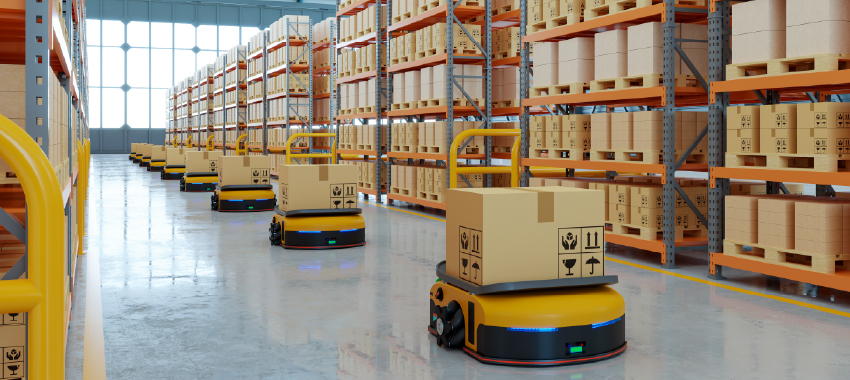
Technology is transforming the traditional packaging warehouse into a smart space, with digitization and automation streamlining manual processes and opening up new opportunities to collect information as well to make things run more efficiently. Smart warehouses are tech-driven, with intelligent solutions accelerating and optimizing every step of the operation.
For example, cloud inventory management software can automatically track supplies and trigger an order when items run low. Customer orders can be processed automatically, with robotic packaging machines getting goods packed up, labeled and out the door faster. And connected tech such as QR codes and RFID tags can collect all kinds of information you can use to make more informed decisions about your packaging solutions and your distribution operation in general.
Smart Warehouses vs Traditional Warehouses
Smart warehouses differ from traditional warehouses in a number of ways, with key factors including:
- Flexibility
- Transparency
- Scalability
Flexibility
Supply chains today are complex, with materials and products coming from all over the place. That’s a good thing, because wider access means more choice, so you can find the best possible vendor and solution for any need. However, it also opens supply chains up to more disruption. The more spread out your network is, the more susceptible it becomes to things like market fluctuations, weather events and even geopolitical conflicts, all of which can throw a spanner into the works.
Fortunately, smart warehouses bring added flexibility, which is essential to overcoming supply chain challenges. Modern tech makes it easier to keep track of inventory and supplies, which lets you stay one step ahead of any issues that arise. You can also pivot more quickly when processes are digitized and automated, because everything moves faster. The more data AI systems have to work with, the better they get at anticipating what’s next—and the more flexible your warehouse can become.
Transparency
While traditional packaging warehouses rely on manually produced reports and information, smart warehouses give you access to real-time digital data. This improves visibility and insights, which gives manufacturers and distributors a much clearer, more accurate understanding of their entire logistics network and distribution operation.
For example, by digitizing and automating inventory management as well as order processing, you can keep tabs on exactly what you have on hand, what’s coming in and what’s going out the door, which means you can get more strategic about inventory allocation and order fulfillment. Real-time tracking also enables better communication with customers about when they can expect their orders to arrive, which can help prevent returns due to delayed delivery.
Having instant access to accurate, up-to-date data is the first step to optimizing processes and costs across your entire operation. The more you know, the smarter you can work—and the better you can boost your bottom line.
Scalability
Digitization and automation, paired with the built-in agility that comes with modern software and systems, make it much easier to scale up or down as needed compared to the traditional warehouse. For example, with automated storage and retrieval systems, you can easily ramp up throughput during peak seasons or when sales spike unexpectedly, without the need to hire new staff to keep up with demand.
Cloud-based software for managing inventory and orders is easily extensible, so you can take control of multiple locations without losing visibility or having to invest in new software. This makes it easier to manage growth. Smart technology can also provide insights that let you make the best use of available warehouse space, so you can scale up without requiring additional storage space.
By bringing AI and machine learning into your packaging warehouse, you can reduce human errors and drastically increase productivity. Streamlining processes at every step means you’ll be able to handle greater order volume without hiring an army of new warehouse workers, so you can scale without worry or delay.
Smart Warehouse Technologies
Next, let’s look at some of the most widely-adopted smart warehouse technologies, what they’re being used for and what they can do for your operation.
- Advanced Inventory Management
- Radio Frequency Identification (RFID)
- Machine Communications
- Robots and Autonomous Vehicles
- Predictive Order Processing
Advanced Inventory Management
AI-powered inventory management software can vastly improve efficiency and accuracy when it comes to stocking supplies. Automating the count saves your warehouse team significant time spent on manually counting or checking supply levels, and reduces the likelihood of error. And by automatically triggering re-orders, AI can help you avoid or at least minimize over- or under-stocking items for better cash flow management.
Modern inventory management software can also help you more accurately forecast demand, taking into account a variety of factors, including market trends, past sales data and external factors, to make sure you have what you need so you don’t keep customers waiting. Optimizing your inventory helps to boost customer satisfaction and keep your whole operation running better.
Radio Frequency Identification (RFID)
Radio frequency identification (RFID) tags are used in smart warehouses to track and gather data about packages in transit. Embedding RFID tags on individual packages, pallets of goods or shipping containers is a smart way to collect real-time data across the supply chain. And with RFID readers at the dock doors of your smart warehouse, you can automatically scan inventory when it comes in or out of your facility, keeping data up to date and accurate.
AI software can then analyze all the data from those tags and distill it into insights you can use to make smarter, data-driven decisions about logistics, distribution and other important business matters. The more efficiency and accuracy you can infuse into your supply chain, the happier your customers will be.
Machine Communications and IIoT
In a smart logistics warehouse, connected devices, machines and systems “talk” to each other, exchanging data without any human intervention. We call these connected systems the Industrial Internet of Things (IIoT). It powers the machine-to-machine communication that’s at the core of the modern, smart warehouse.
The data these machines and devices exchange improves efficiency and accuracy in every warehouse process, from inventory management to order packing. By continuously collecting and analyzing real-time data, IIoT systems can help you streamline, optimize and accelerate every step of your supply and distribution chain.
Robots and Autonomous Vehicles
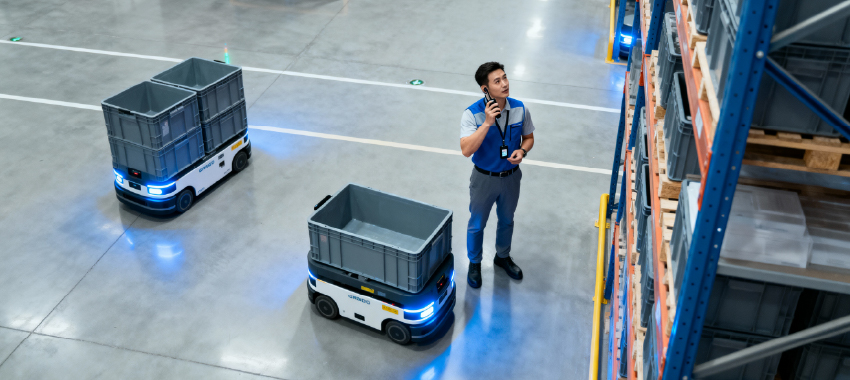
Think a robot-run warehouse sounds like sci-fi? Not anymore. With automation and other smart warehouse technology advancements, robots are already being used in many smart warehouses. Robots can perform a range of repetitive tasks, such as picking and sorting items as well as packing orders on an assembly line. Robot teams can streamline operations and save money while also reducing the risk of human error.
Autonomous vehicles use features like AI-powered mapping, vision-based systems and sensors to safely navigate the warehouse floor without a driver behind the wheel. Self-driving forklifts, for example, can be used to move pallets around the warehouse. Autonomous vehicles can also retrieve inventory from difficult to reach places and safely perform other heavy, difficult and dangerous tasks without putting human staff at risk.
Predictive Order Processing
Imagine if you had a crystal ball that could show you how many orders to expect over the next day, week, month, or year—how much more easily could you manage your inventory and your whole operation? Predictive order processing is possible with software that uses AI and machine learning to analyze relevant data and anticipate upcoming demand volume and fluctuations.
Data analysis is about all identifying and replicating patterns, so the more past sales data you have, the more accurately you can forecast demand. A smart system can predict not just what customers are likely to order, but when and where. This allows you to stay one step ahead of inventory management and order fulfillment, both of which boost efficiency and customer satisfaction.
Benefits of Smart Warehouse Automation
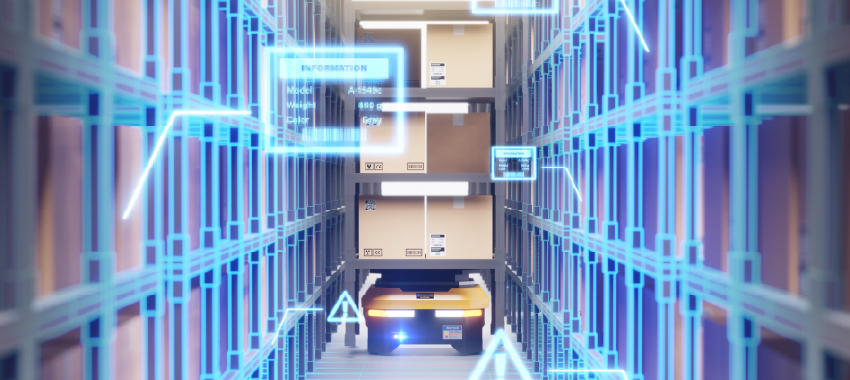
In case you’re still not convinced, let’s talk about the many business benefits smart warehouses can deliver, including:
- Operating Cost Reduction
- Faster Shipping
- Real Time Tracking
- Process Efficiencies
- Fewer Returns
- Improved Customer Satisfaction
Operating Cost Reduction
Smart warehousing streamlines processes and gives efficiency a big boost in lots of ways that all help to reduce overall operating costs. For starters, automating inventory management lets you run a tighter ship, keeping just what you need on hand and triggering a reorder only when you’re running low.
Accelerating processes like order picking and packing saves even more time and money. And by replacing manual work with machine automation, you can prevent the kind of costly errors that can quickly snowball. All of this adds up to a tighter cash flow and lower expenses.
Faster Shipping
In a distribution operation, every packaging warehouse process can slow you down—and every error throws a wrench into the works. By automating both paper-based processes, such as order processing and inventory management, and manual work like unloading incoming shipments and boxing up outgoing orders, you can speed up your entire operation.
Faster shipping is essential to meeting the sky-high expectations of today’s customers, which also boosts your brand reputation—another bottom-line win. Improve your throughput and make better use of your resources.
Real-Time Tracking
Distribution and supply chains today are complex, and keeping track of all the moving parts, from incoming inventory and packaging materials to outgoing orders and shipments, has traditionally meant relying on outside sources. You may know when a package was sent and when it’s expected to arrive, but the in-between phase is a mystery.
With smart new technology like QR codes, RFID tags and IIoT systems, you can track packages and products in real-time. This gives you a more accurate picture of your distribution operation so you can let customers know when to expect delivery. Plus, you can get ahead of potential issues if a shipment runs into delays.

Improves Process Efficiencies
No matter how well your team works, there are some things that machines do better. AI systems excel at processing large amounts of data with incredible speed and accuracy. They can identify and learn from patterns much more easily than people can. And both machines and software can carry out repetitive, mundane tasks all day and night without ever growing tired, bored or weary.
By implementing AI-powered software and machinery in your warehouse and allowing this technology to focus on the work it does best, you can vastly improve process efficiency across your operation. At the same time, taking these tasks off of your team’s plates frees them up to focus on the kind of work they do best, too—like providing personalized customer service, thinking strategically and finding new ways to add value for the business.
Reduces Product Returns
Returns cost your business in lots of ways. Excess shipping fees and material expenses. Product losses. Bad reviews that can damage your reputation. Not to mention the extra time and resources you have to spend on processing the return, reshelving inventory and trying to repair damaged customer relationships.
Smart warehousing can help reduce returns by speeding up order processing and shipment, giving customers a more accurate idea of when to expect delivery and letting you track package progress in real time. Better visibility and efficiency reduce the likelihood of products arriving late or damaged, so customers are less likely to send them back.
Improved Customer Satisfaction
Customers today expect near-instant gratification. They want speedy delivery at low or no cost to them, and they expect orders to arrive in pristine condition. By infusing AI and advanced technology into your distribution operation, you can keep costs low while accelerating processes and increasing efficiency.
All of these benefits are not only good for your business, they’re better for customers too—improving satisfaction, which boosts your brand reputation and your bottom line. It’s simple really. Happy customers keep coming back, and spread the word to others.
Partner with Ernest for Smart Warehouse & Automation Insights
If you’re looking to invest in smart warehouse technology, AI-powered systems and automation, there’s no need to go it alone. Ernest has experience and expertise in the full range of packaging process design and automation solutions.
We’d love to partner with you to improve your warehouse operation with AI and automation—it’s all about maximizing your production line flow without minimizing quality. Let’s talk about how we can help make your warehouse smarter.