Where Does Recycled Plastic Go?
February 06, 2026
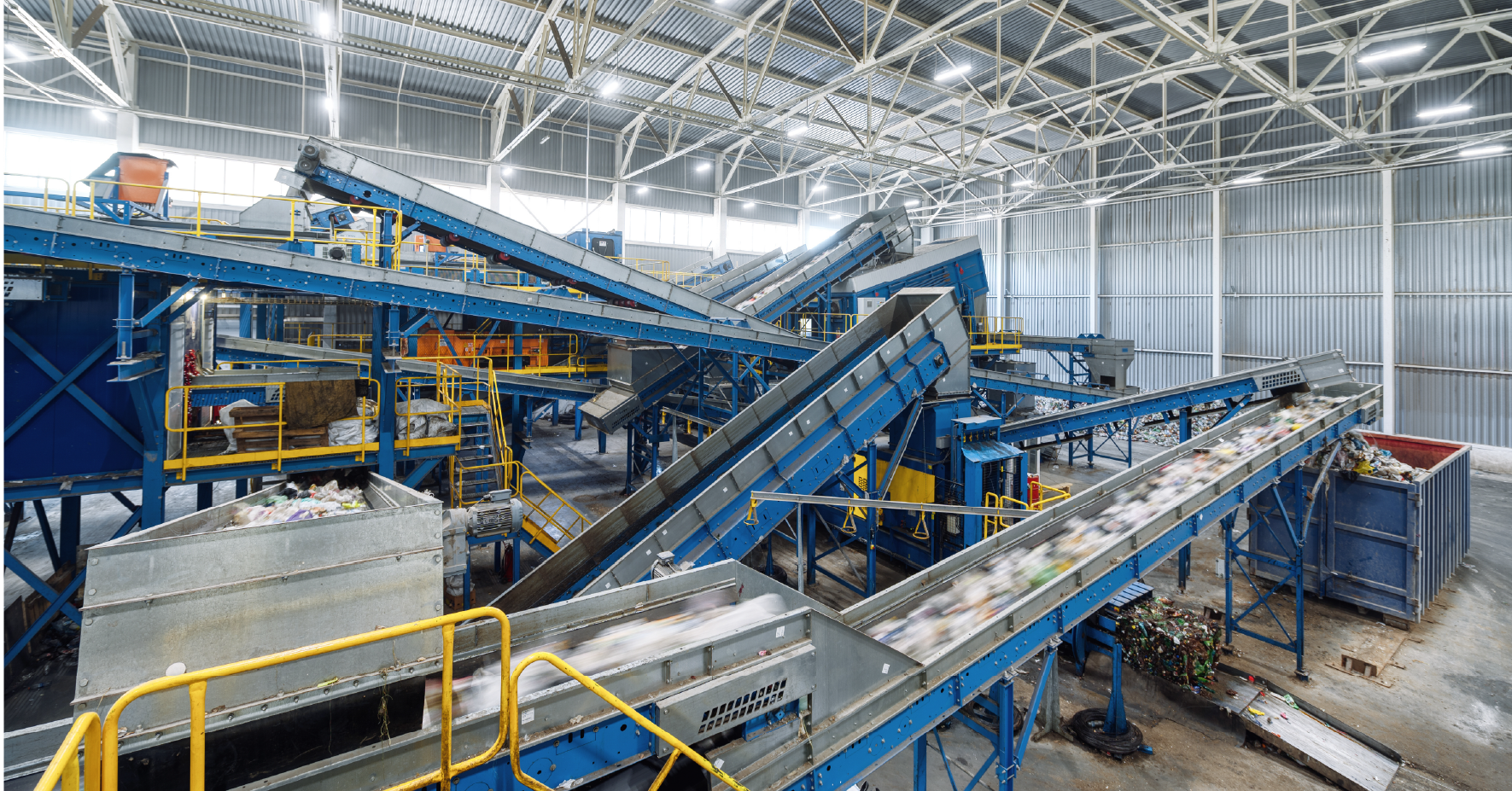
In the US, we use a LOT of plastic every day. Plastic bottles, plastic containers, plastic bags. Most of us try to recycle as much of it as possible. In fact, in 2022, we recycled over 5 billion pounds of plastic packaging.
But have you ever stopped to wonder what happens to recycled plastic? Where does recycled plastic go after you drop it in the recycling bin? In this article, you’ll learn about the plastic recycling process, where all that plastic is likely to end up and how you can do your part to reduce plastic waste.
How Does the Plastic Recycling Process Work?
When done right, plastic recycling can yield some innovative and exciting results, such as this recycled plastic bike path in India. But the process of keeping plastic out of landfills requires a number of steps, some of which are costly and require significant infrastructure investment.
- Collection
- Sorting
- Washing
- Shredding
- Separating
- Extruding & Compounding
Collection
First, recyclable plastic has to be collected from either a curbside recycling bin or a community recycling center. In residential areas, curbside bins are usually picked up once a week along with regular trash and yard waste, and taken to a material recovery facility (MRF). Community recycling centers are often run by local governments and open during regular business hours, though some locations may require an appointment.
Either way, the collection process starts with people making the effort to put plastic containers into collection bins. Note, it’s important not to “wish-cycle,” which means tossing non-recyclables into the recycling bin in the hopes that they’ll be recycled. This not only drives up costs, it can put workers and machinery at risk. Plastic bags in particular are often thrown in with recycling and can get caught in machinery, creating safety and productivity issues.
Sorting
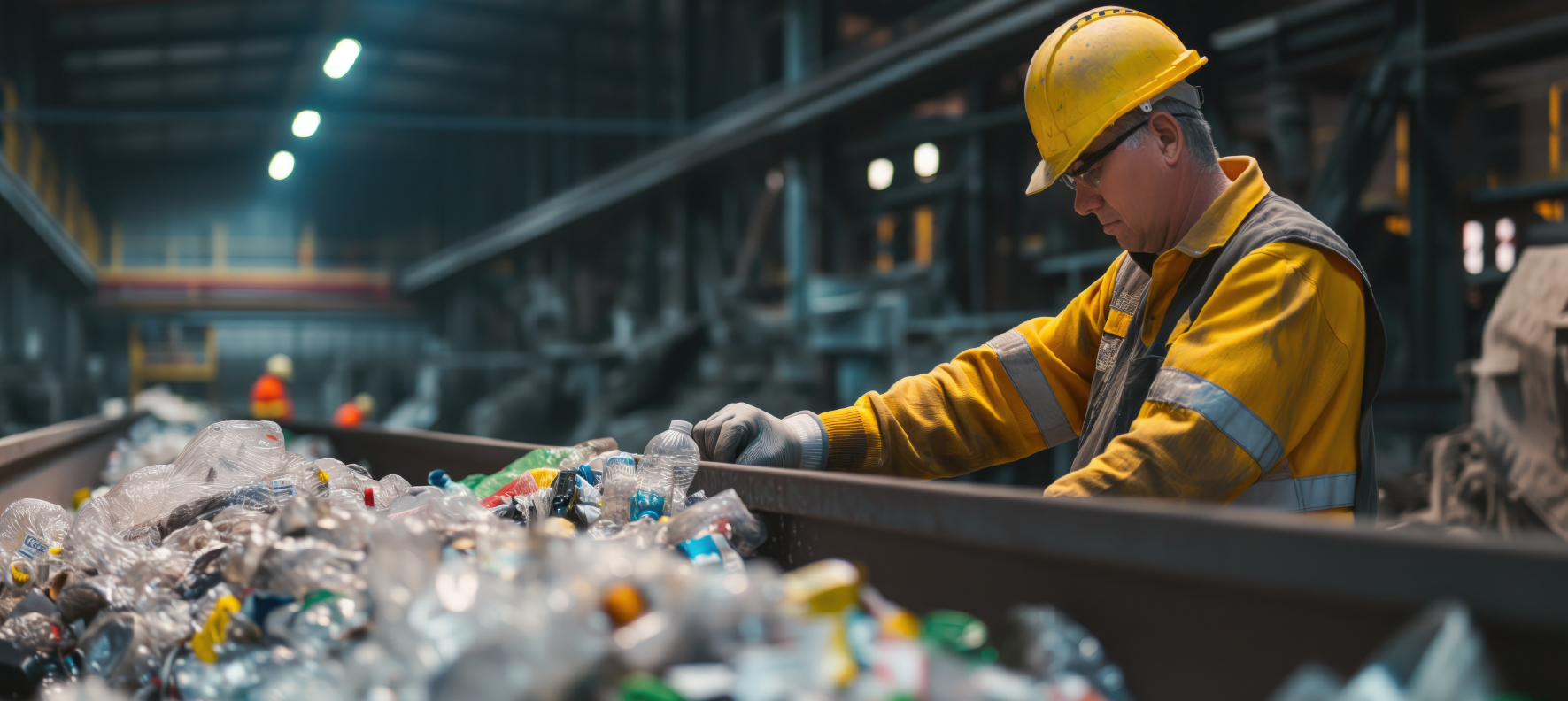
Once recyclables reach the MRF, they have to be sorted. This is typically done using machinery such as optical sorters, ballistic separators and eddy currents, with in-person quality control (i.e., removing anything that ends up in the wrong category) done by hand.
First, non-recyclable materials, called contaminants, have to be removed. The remaining materials are then sorted into categories, such as aluminum, glass and paper/cardboard. Plastics may be further sorted into various types, or even by color, thickness or type of resin, indicated by the number you can find inside the triangular recycling symbol. The most common types of recyclable plastic are PET, HDPE and PP.
Washing
Plastic containers and bottles often contain food or beverage residue when they reach the recycling facility, and can also get dusty and dirty during the collection and sorting phases. Before you can begin processing recycled plastic, it has to be cleaned. Plastic washing machines wash away dirt or residue so the plastic is clean and ready to be recycled. Any remaining labels and adhesives are also removed during this phase.
Shredding
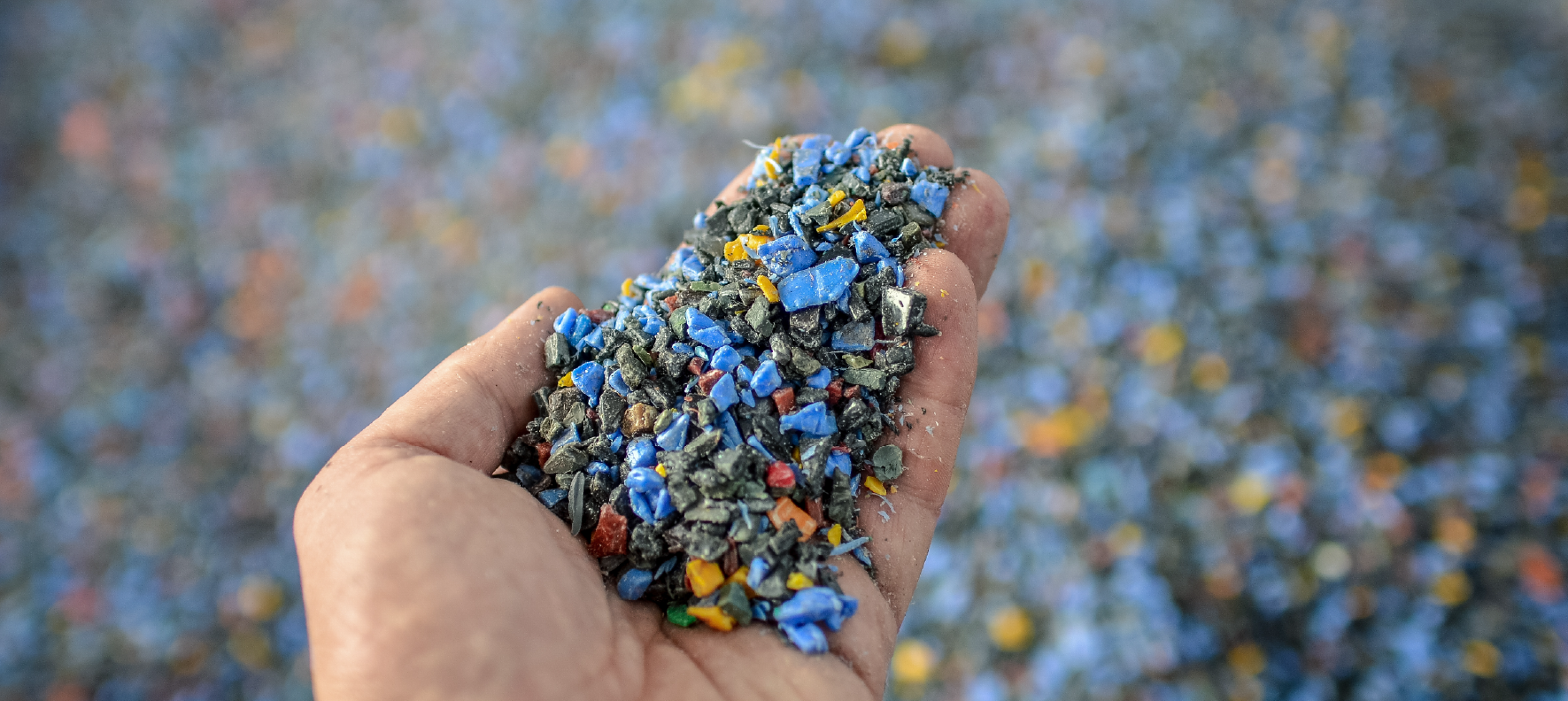
Once the plastics have been thoroughly cleaned, they’re fed into a shredder or granulator. These machines break down plastic bottles and containers into smaller, uniform-sized pieces that increase the surface area, so the material can be more easily recycled. Flakes and pellets are also easier to transport, giving the plastic recycling process an extra efficiency boost.
Separating
At some facilities, shredded plastics are further sorted using various types of machinery and processes. For example, sink-float tanks separate plastics by density, with heavier plastics like PET sinking and lighter particles like PP and PE floating. Air classification can be done by putting plastic particles into a wind tunnel, where thick pieces will soar, separating them from heavy pieces. If separating plastics by color, an optical sorting machine can also be used at this stage.
Extruding & Compounding
Finally, these materials are converted into a new, raw material that can be used to make new products and packaging. First, plastic flakes or pellets are melted into a semi-liquid in a heated extruder machine. Pushing this lava-like plastic through a screen removes any remaining contaminants. Then, it’s forced through a die to form strands, which are cooled in water before being chopped into small, uniform-sized pellets.
To give this new material specific qualities or abilities, additives can be mixed with the plastic during extrusion. This includes things like colors, stabilizers and fillers. Once the newly formed pellets are cooled and packaged, they can be shipped off to a manufacturing facility and made into something new.
How Much Plastic Actually Gets Recycled?
While the US generates a whopping 48 million tons of plastic each year, only about 5% of it is being recycled while 86% ends up in landfills. Roughly one quarter of plastic produced in the US is used for packaging, and about 95% of plastic packaging material is single-use.
Not only does this single-use packaging do significant environmental damage, it’s also costing us materially. According to a recent study, our economy loses between $80B and $120B worth of plastic each year to the single-use cycle.
How Much Plastic Gets Exported?
While many of us assume when we put a PET bottle in the recycling bin, it’s going to be neatly recycled and made into something new right here in the US, that’s not always the case. Roughly one-third of recyclable plastic, around 1.07 million tons, is actually exported to other countries.
Why are we shipping waste overseas? Many US recycling facilities don’t have the capacity to keep up with the huge amount of plastic waste that’s generated each year. In some cases, exporting plastic lets these facilities check a box to say they’ve recycled X amount of plastic waste without actually doing so.
Sadly, many of the countries on the receiving end of this material are less developed and lack the infrastructure to safely and sustainably handle the massive amount of plastic that comes not just from the US, but from other developed countries as well. Some countries, like China and India, have enacted stricter policies to protect their environment and minimize the amount of waste they receive from developed countries looking to offload it.
Recycled Plastic in Landfills
Unfortunately, despite widespread recycling efforts, much of the plastic we produce each year ends up in landfills, where it releases toxic chemicals into the environment. Because plastic isn’t biodegradable, it can take hundreds or even thousands of years to decompose, contaminating soil and groundwater in the process.
According to a recent report, only 9% of the plastic that’s generated each year is actually being recycled. Why? Many types of plastic are not recyclable to begin with, and not everyone recycles. A lot of plastic goes straight into the trash, where it’s likely destined for a landfill. In some cases, recycling facilities don’t have the infrastructure or capacity to handle all the plastic they receive. Collecting, sorting and processing recycled plastics is expensive, and not all facilities recycle the same materials.
To counter this issue, which is a major environmental threat, companies can opt to make their packaging using plastics that are definitely recyclable — typically those labeled with a 1 (PETE) or a 2 (HDPE). Some state and local governments are passing legislation holding companies accountable for the plastic they produce, for example, by making them pay to recycle their plastic packaging or pay for the infrastructure to do so. As consumers, we can follow local recycling guidelines and look for recyclable plastic packaging.
Recycled Plastic in Oceans
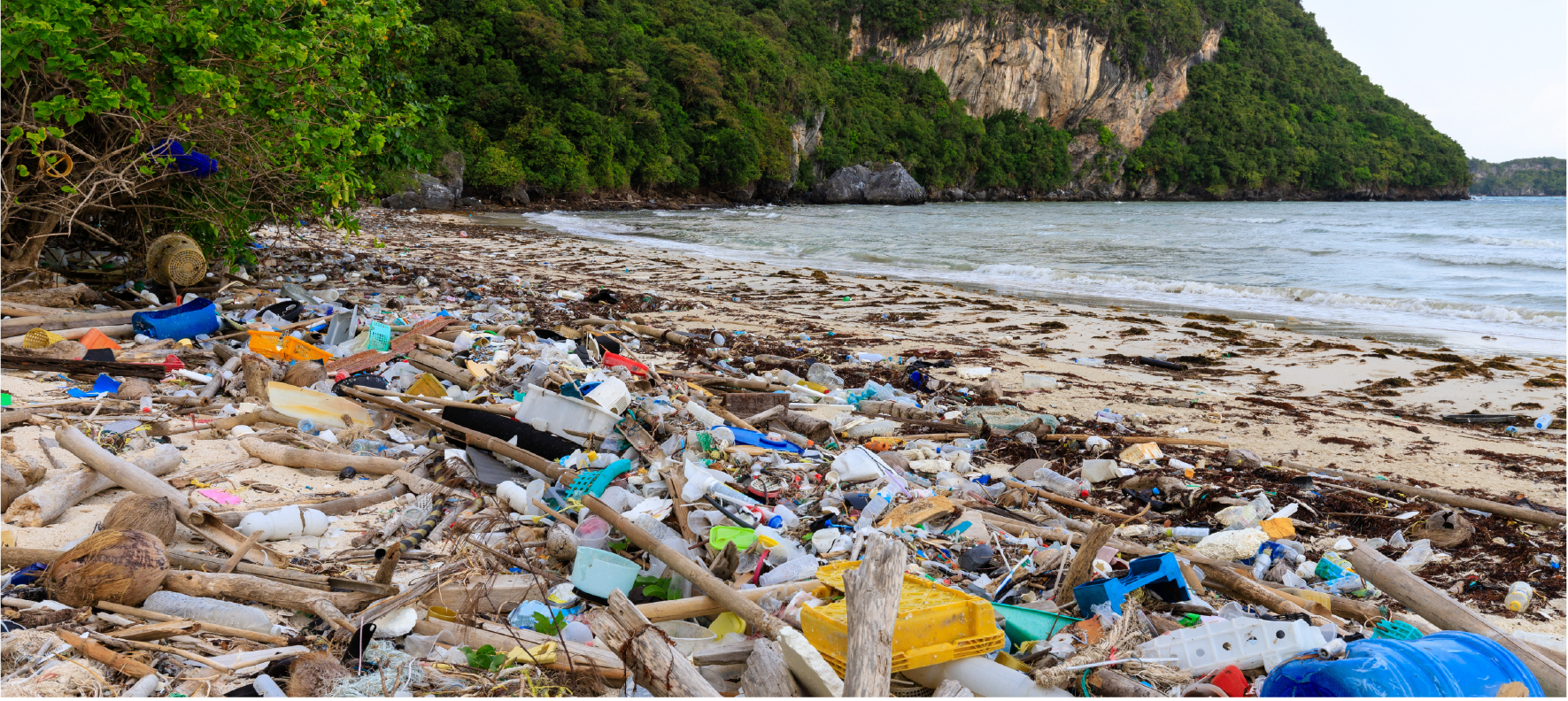
Sadly, a whole lot of plastic waste also ends up in our oceans. According to the Ocean Conservancy, around 0.5% of the 353 million tons of plastic waste that’s generated each year ends up there — about 1.7 million tons. Just like the plastic in landfills, the plastic in our oceans takes hundreds of years to break down, leaching toxic chemicals that pollute the water, damage ecosystems and impact all kinds of marine life.
Some plastic floats on the surface, in some cases forming floating islands of waste known as garbage patches. Some of it washes up on shore. Some of it sinks to the seabed. Sea birds, sea turtles, fish and other species often mistake plastic for food and suffer life-threatening problems after ingesting it. Many forms of plastic can endanger marine life, from plastic bags to six-pack rings. The danger of entanglement and choking are real.
So, what’s being done to counter this problem? Again, progress really depends on people. Conservancy groups around the world organize coastal cleanups, where volunteers work to remove trash from our oceans and shores. But the key to real change is prevention. Communities, organizations and businesses must come together to reduce the amount of plastic we use, especially single-use plastics. Legislation can also help.
Source Reduction: Reducing Plastic Usage
The key to minimizing the amount of plastic waste that’s generated each year is to cut it off at the source. Source reduction is one of the most vital components of reducing plastic usage and the resulting waste. This might mean reducing the size of your inner packaging while still maintaining its structural integrity, or it might mean replacing the material it’s made of altogether. Either way, by using less plastic material in packaging, we can reduce the amount of plastic that enters the recycling process as well as the amount that ends up in our environment.
Improve Your Sustainability Footprint with Ernest
At Ernest, we understand the importance of going green. Every day we implement proven methods to help our clients reduce, reuse and recycle, and we’re always looking for new ways to make packaging more environmentally friendly. Bringing more sustainable options to the industry is one of our chief goals in Moving Packaging Forward. To find out how we can help your organization drive sustainable solutions for years to come, schedule a call today.