Alcohol Packaging Trends and Examples
May 29, 2026
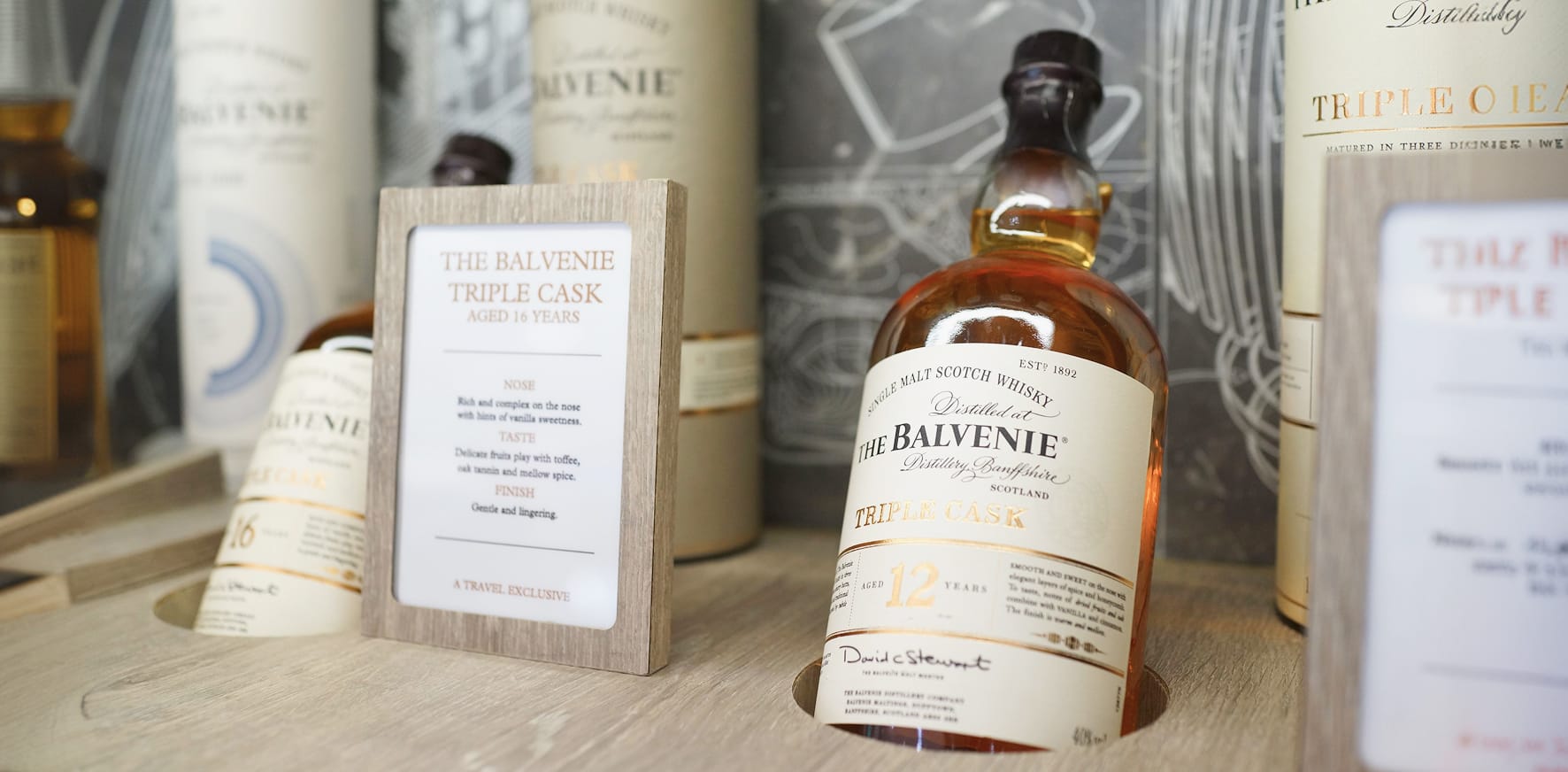
The hard beverage industry is booming. In the US alone, revenue from alcohol sales is expected to reach $1.7 trillion (yup, you read that right) this year. With consumption split pretty evenly between the top three categories of beer, wine and spirits, and consumer preferences varying significantly across age groups and demographics, competition is fierce.
For brands looking to break away from the pack, packaging design is a strategic lever that can help you create a more memorable customer experience, swaying shoppers and winning market share. In this article, you’ll learn about the top trends influencing alcohol packaging and see examples of how innovative liquor packaging design helps drive sales.
The Importance of Innovation in Alcohol Packaging
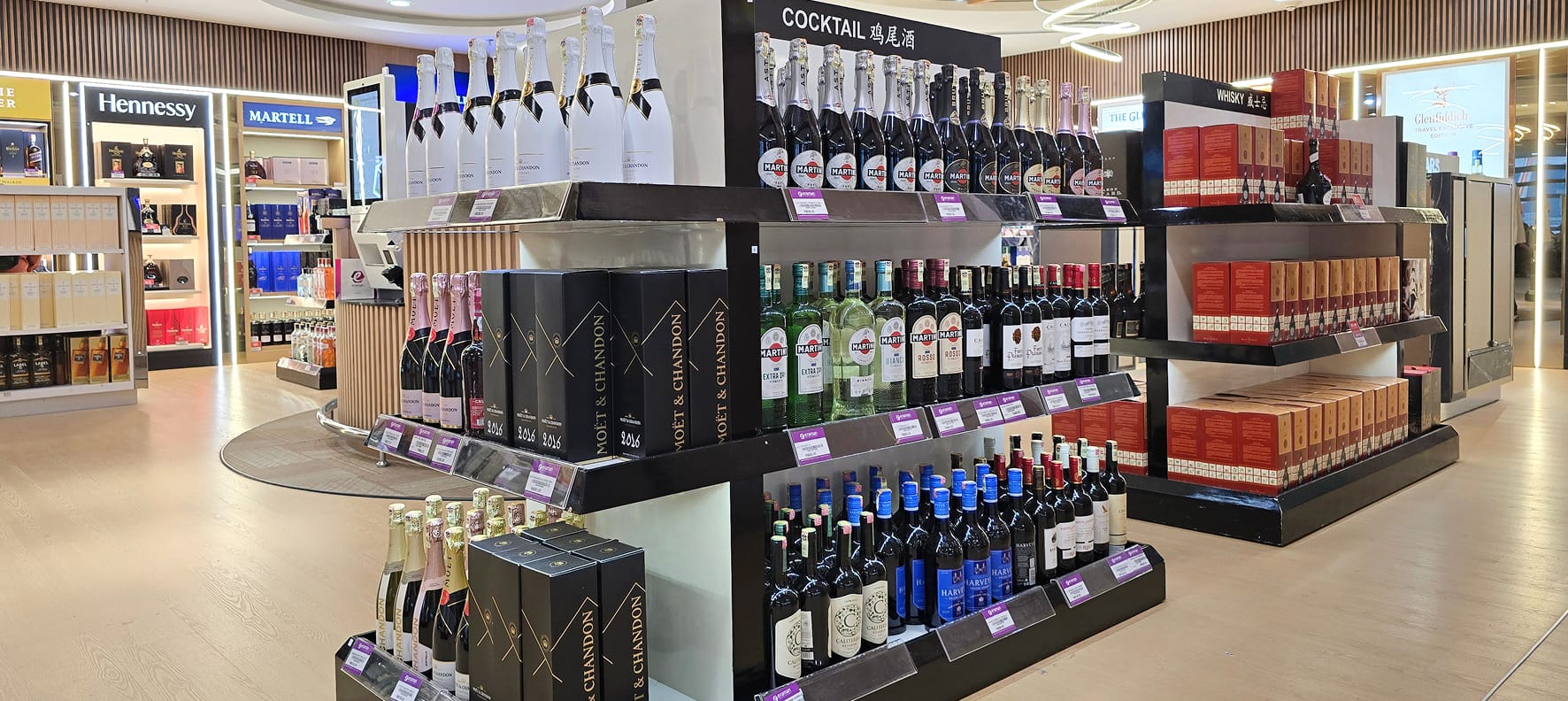
Traditional alcohol packaging is pretty much limited to bottles and cans. Maybe a box for wine. But with more and more drinks flooding the market, innovative packaging has become a key differentiator, helping savvy brands influence consumer perception and buying decisions. The alcoholic beverage packaging market is booming too, valued at $55.8B in 2025 and projected to top $100B by 2036.
Many alcohol manufacturers are adopting more sustainable packaging solutions to target green-minded drinkers, while others are thinking outside the bottle to attract the attention of busy, over-stimulated shoppers. Even established brands like Johnnie Walker, Carlsberg and Hennessy have been re-thinking their packaging in a bid to win more market share in the face of stiff competition.
Trends in Modern Alcohol Packaging
So, what are beverage-makers doing to stand out on the shelf? Let’s look at the top trends influencing alcoholic beverage packaging and driving sales.
Sustainable Alcohol Packaging
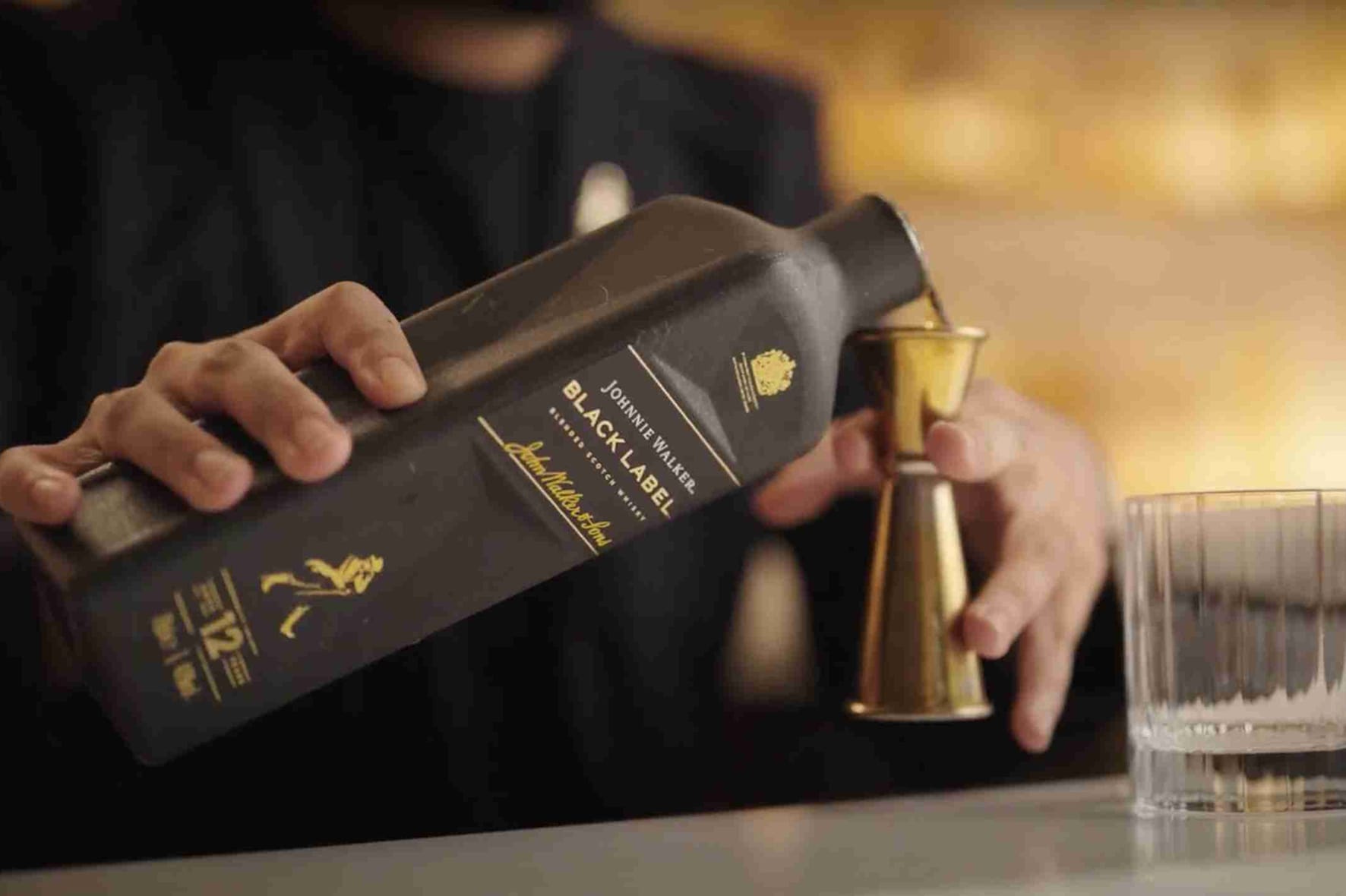
While bottles and cans have always been recyclable, many booze brands are taking it a step further to woo eco-minded consumers. For example, Johnnie Walker launched a paper-based bottle for its signature Black Label Scotch Whiskey. The bottle, which is both recyclable and biodegradable, is made from sustainably sourced pulp. Dutch beermaker Carlsberg is also working on a green(er) bottle, which they’ve dubbed “the world’s first paper beer bottle.”
Another environmentally-focused innovation is lightweight bottles, which use significantly less material than traditional bottles, reducing carbon footprint and water usage. British distiller Greenalls offers their “Greener Still” gin in a lightweight bottle made from 94% paperboard. Absolut Vodka also launched a paper-based bottle for its iconic spirit, featuring 57% paper with a recycled plastic interior. Once it’s gone, you can simply toss the bottle in the recycling bin for curbside pickup.
Smart Packaging for Alcohol
Another liquor packaging trend we’ll toast to is smart packaging, which can be used to verify authenticity and deepen consumer engagement. Interactive features like QR codes and near-field communications (NFC) codes can connect consumers to interactive brand content via the camera on their phone or smart device. It’s a great way to make the brand experience more fun, winning over new customers and building long-term loyalty.
Tanqueray No. Ten gin recently offered consumers access to a “cocktail concierge” service led by brand ambassador Stanley Tucci, who shared ideas and recipes for making cocktails. Johnnie Walker has also incorporated QR codes onto its Black Label bottle, linking out to an AR cocktail-mixing guide.
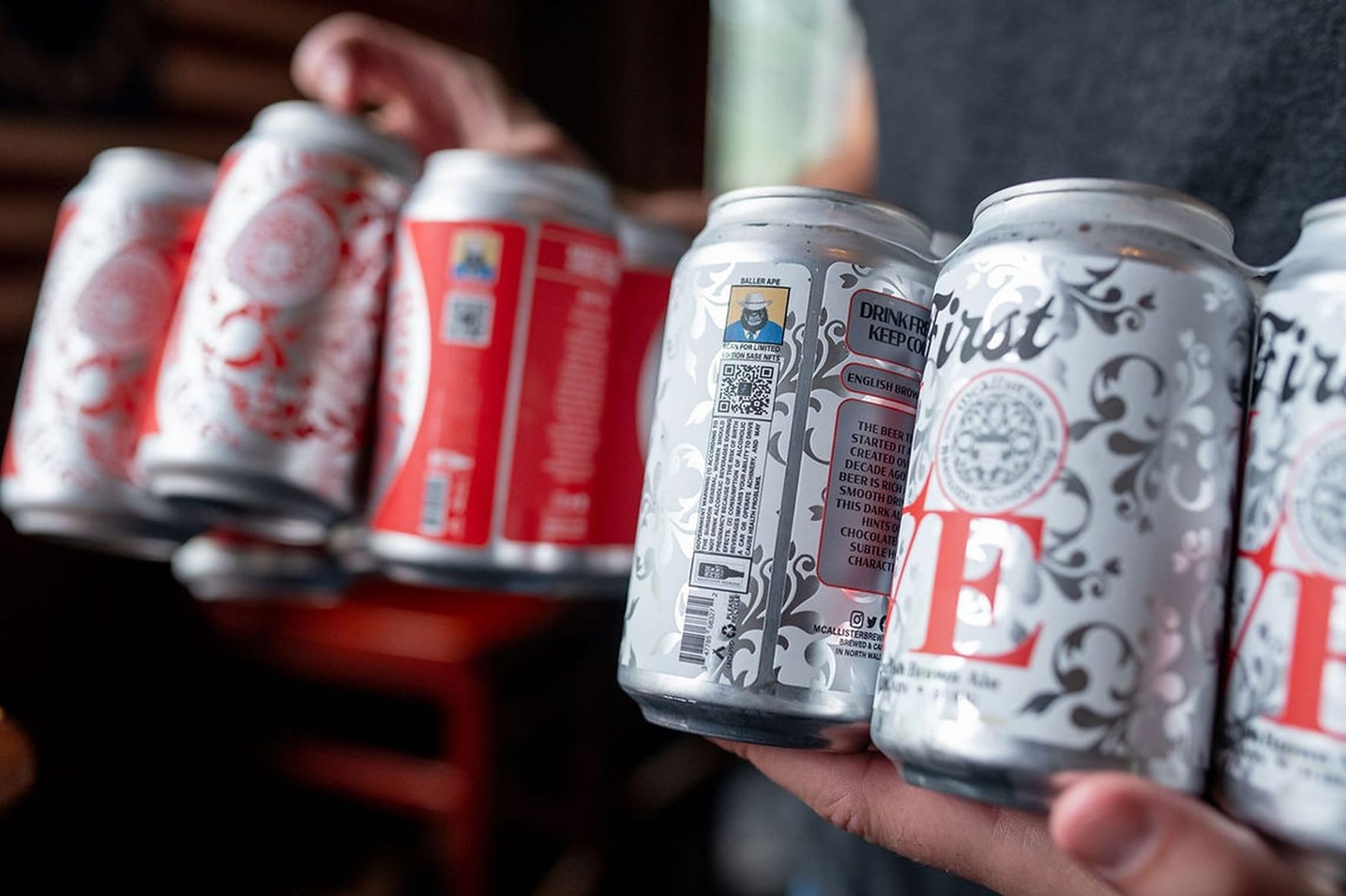
Pennsylvania-based McAllister Brewing Co. has used QR codes on its beer can to enhance the customer experience and deepen connections. Scanning the QR codes takes buyers to a site where they can purchase a non-fungible token (NFT), which then allows them access to a virtual speakeasy where they can gather with other lovers of that specific beer.
Luxury Alcohol Packaging
A top-shelf beverage calls for luxury packaging design that feels high-end and exclusive, creating a premium experience worth the price tag. Luxury packaging trends in the alcohol industry include elevated unboxing, with top-tier materials and features like weighted closures, embossed finishes and multi-layer structures lending a chic feel to the experience.
Sustainability is a rising trend for luxury booze packaging, with many distillers opting for more lightweight glass and biodegradable finishes. The idea is to make high-end packaging that’s more sustainable without compromising on quality, because that’s what consumers today care about.
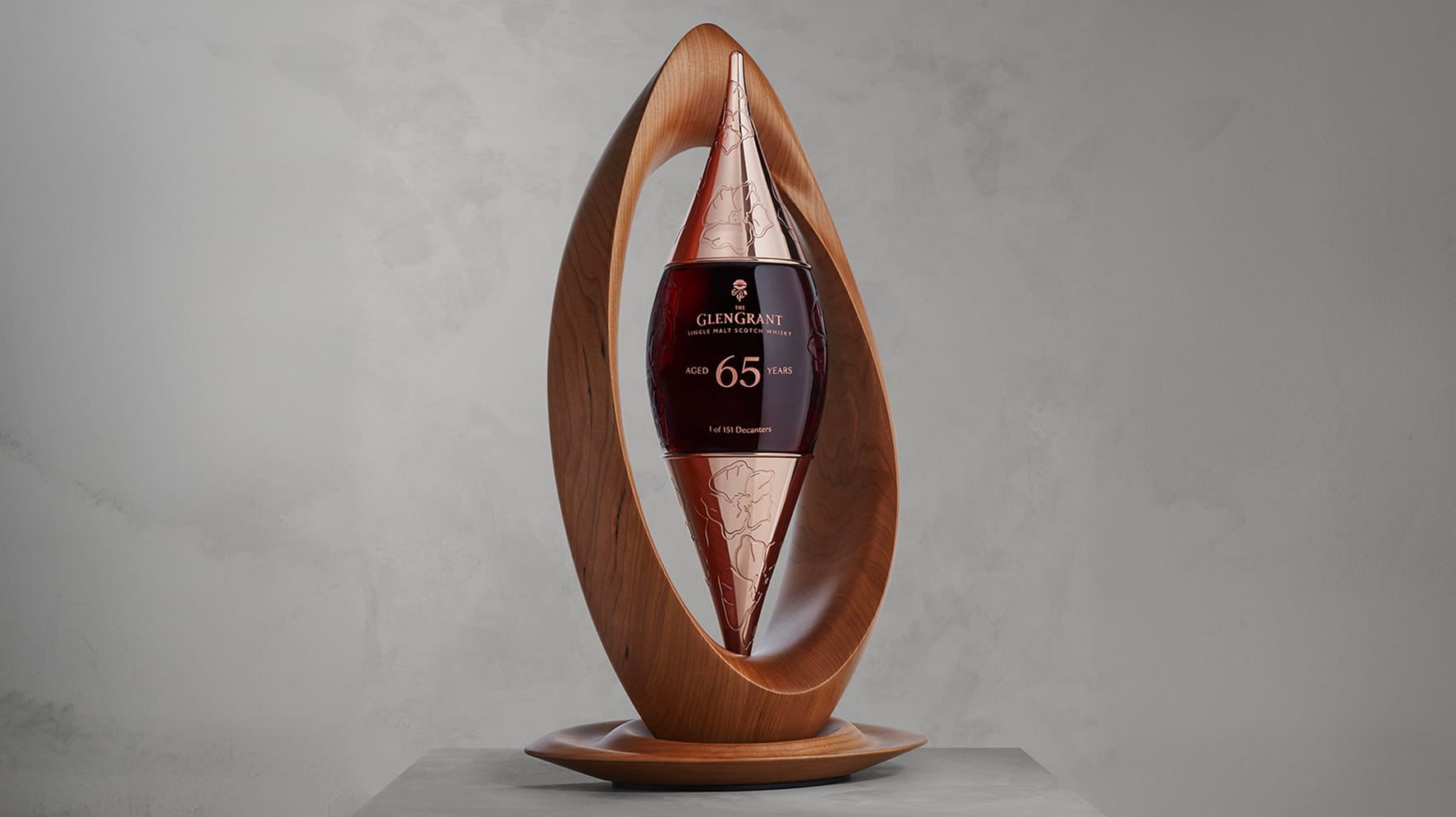
Limited editions, collectable collabs and market-specific designs also add to the appeal of luxury beverage branding. Check out this stunning design The Glen Grant launched in 2025 for its 65-year-old single malt Scotch whiskey. Inspired by the Himalayan blue poppy that grows in the distillery’s “Garden of Splendour,” the bottle is truly a work of art that can be displayed proudly on any shelf.
Functional Alcohol Packaging
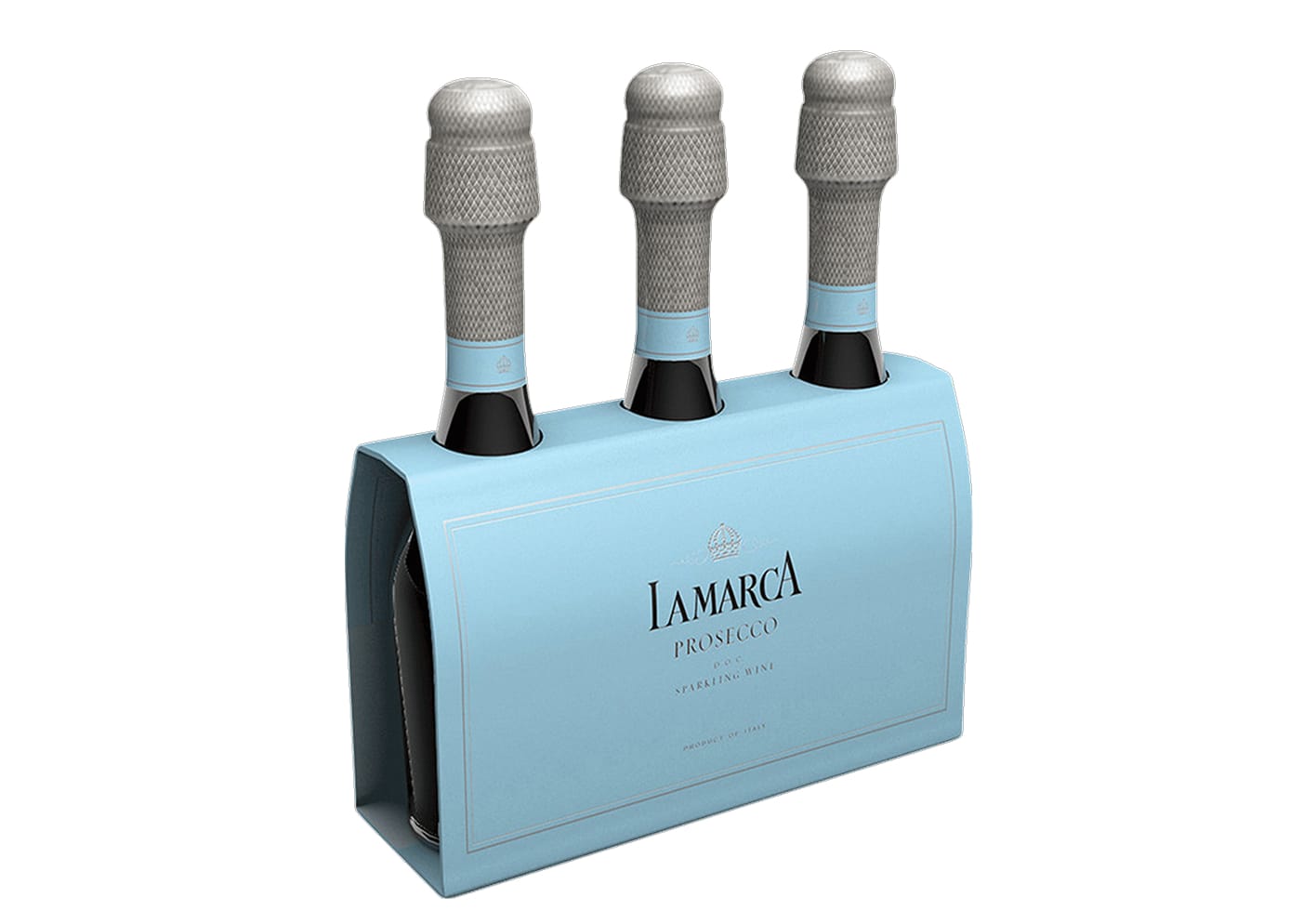
Consumers today love convenience, which is the driving factor behind functional trends like single-serve drink packaging. Sure, beer has always come in individual bottles and cans, but now shoppers can grab single-serving cans, pouches and bottles of wine, champagne and prosecco, too — with twist-off tops so you don’t need a corkscrew to pour out some fun.
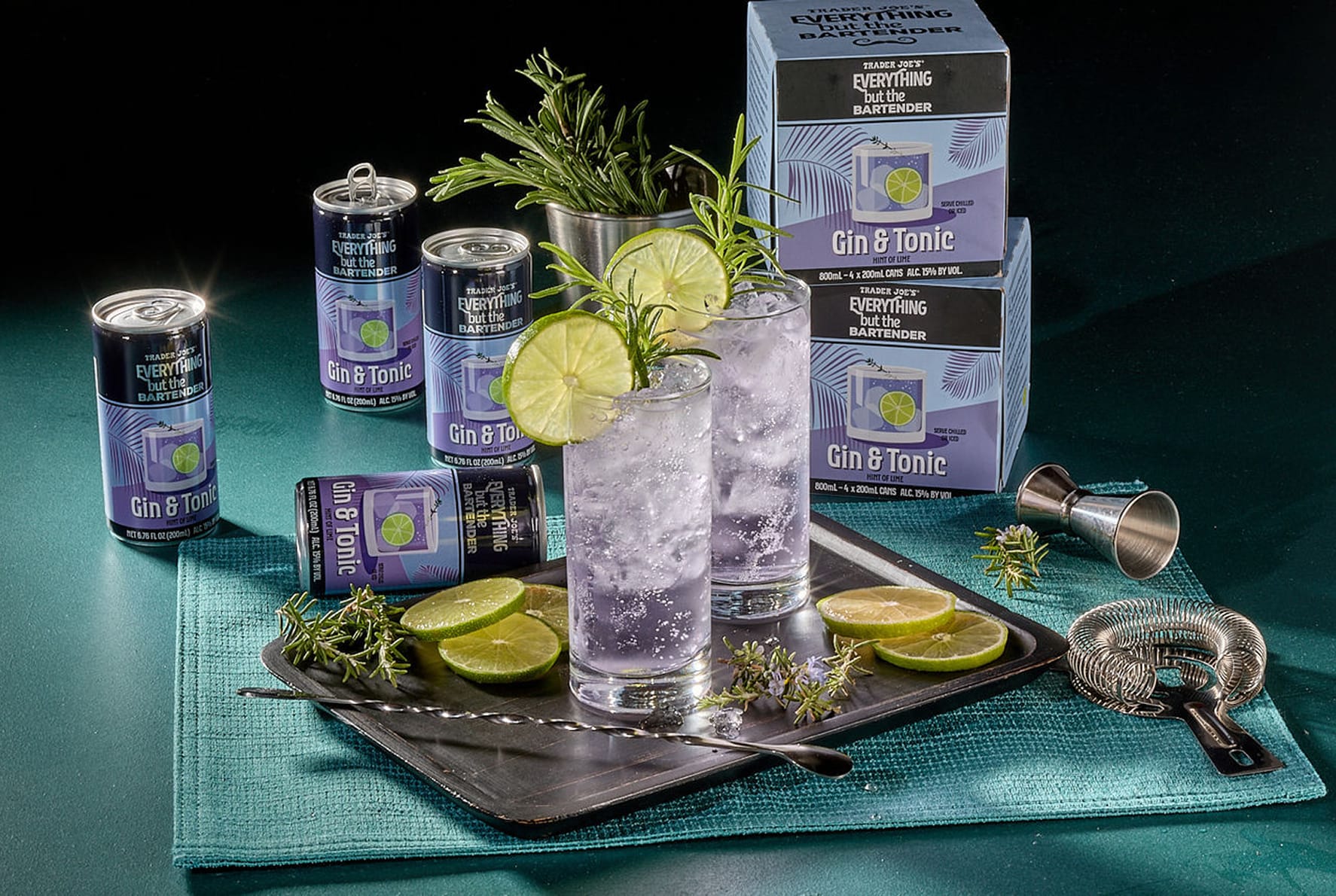
Ready-to-drink cocktails are also having a moment. Retailers are stocking their shelves with cans and bottles of every kind of single-serve cocktail you can imagine. Well-established brands like Malibu and Jack Daniels are getting in on the trend, as are lots of new players.
Cutwater Spirits shook up the whole industry with their ready-made cocktails-in-a-can, sparking a whole slew of similar products. Even retail giants like Trader Joe’s are recognizing the opportunity, launching their own line of “Everything but the Bartender” pre-mixed drinks.
Retro Alcohol Packaging
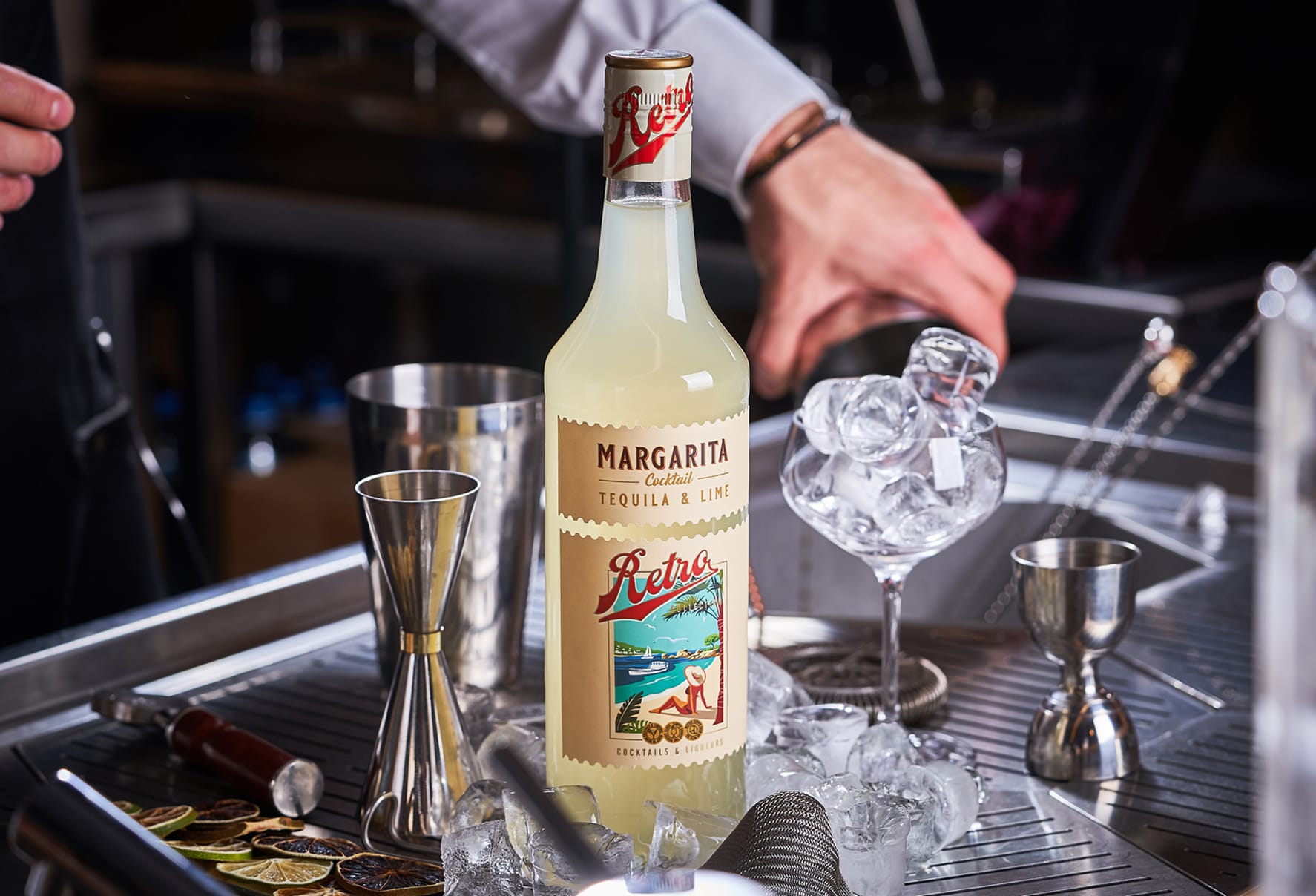
Retro packaging is always in style, and some alcoholic beverage-makers are leaning into nostalgia with vintage-inspired packaging designs. Sodiko launched a whole line of ready-to-drink Retro Cocktails, served in full-size bottles featuring designs inspired by sixties and seventies art and advertising.
Vintage design can also invoke a strong sense of heritage, which is a key selling point for brands that have been around for a long time. Graham’s Port, for example, celebrated their 200th anniversary by redesigning their packaging to highlight their long tradition of quality and attention to detail. Many brands are following suit, bringing back legacy logos to create a sense of tradition and make buyers feel like they’re part of something bigger.
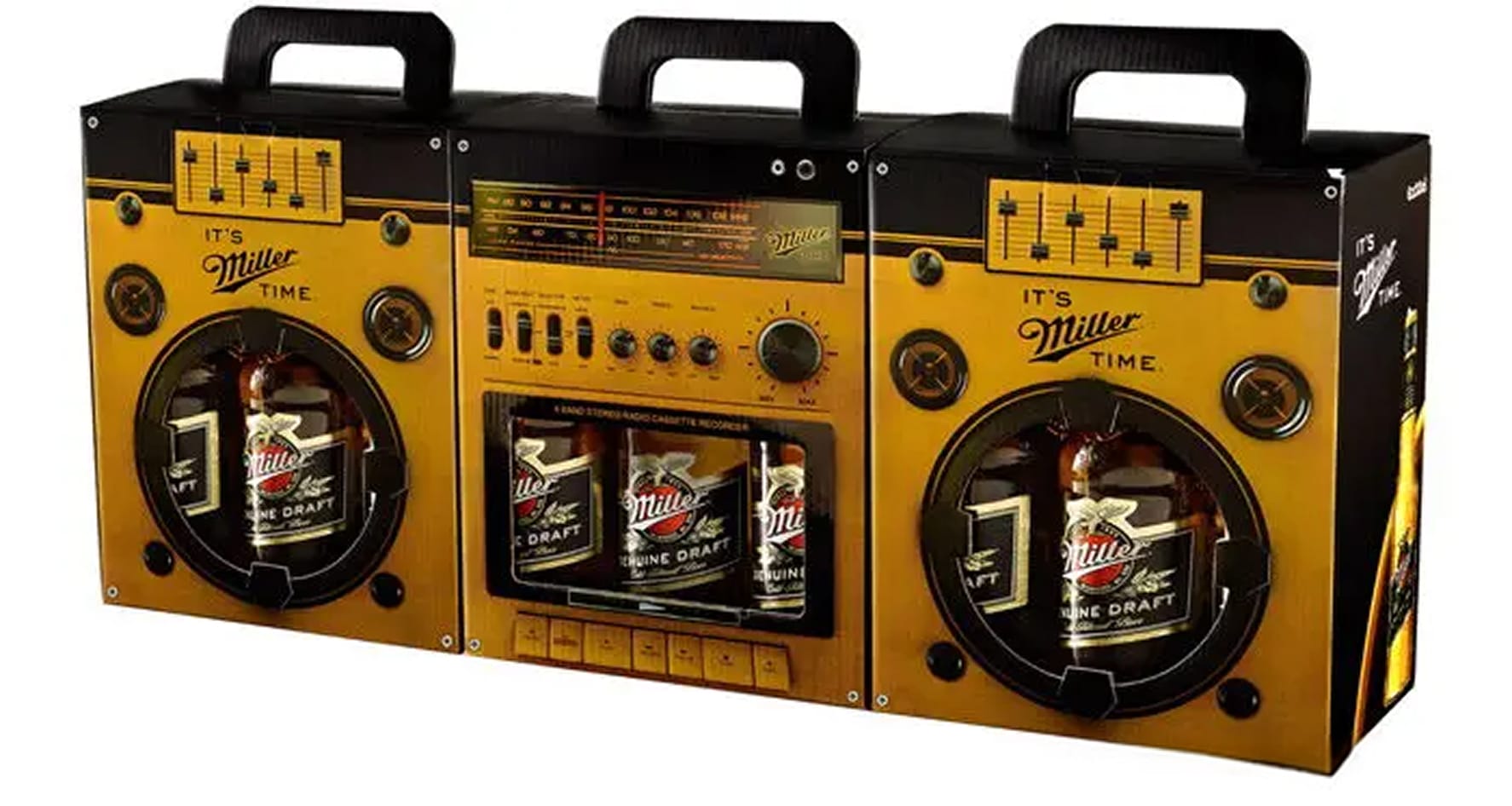
Budweiser, Pabst Blue Ribbon and High West Whiskey are all embracing old-school packaging designs to inspire trust and loyalty. And Miller Lite recently released a limited run packaging design that looks like a boom box, no doubt sparking some serious nostalgia in Gen X drinkers.
Edible Alcohol Packaging
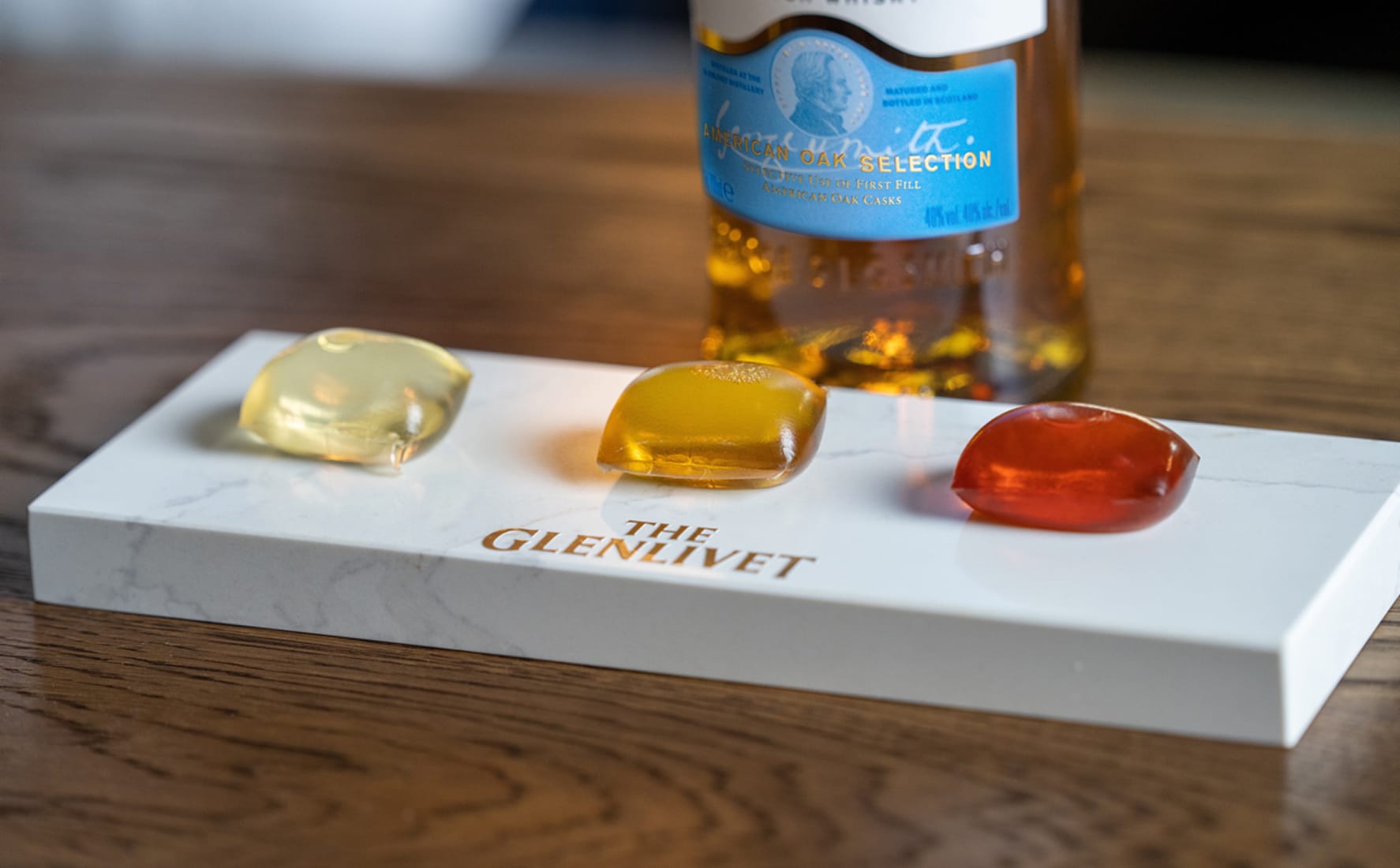
With so much packaging ending up in landfills, some brands are looking to take sustainability to new heights with edible packaging — even for alcoholic drinks. In fact, we first told you about edible beer packaging several years ago, with a Florida brewery developing a biodegradable, wheat-and-barley-based replacement for the plastic rings that hold six-packs together without endangering marine life. Sustainability is still in the spotlight, and this trend is gaining traction.
Glenlivet recently launched a Capsule Collection, featuring bite-size cocktail pods made from seaweed extract. Marketed as “glassless cock tails,” the pods each hold 23ml of Scotch whiskey that you simply pop into your mouth to consume. Smith & Sinclair similarly offers alcoholic cocktail gummies, marketing under the tagline, “Eat your drink.”
Limited Edition Alcohol Packaging
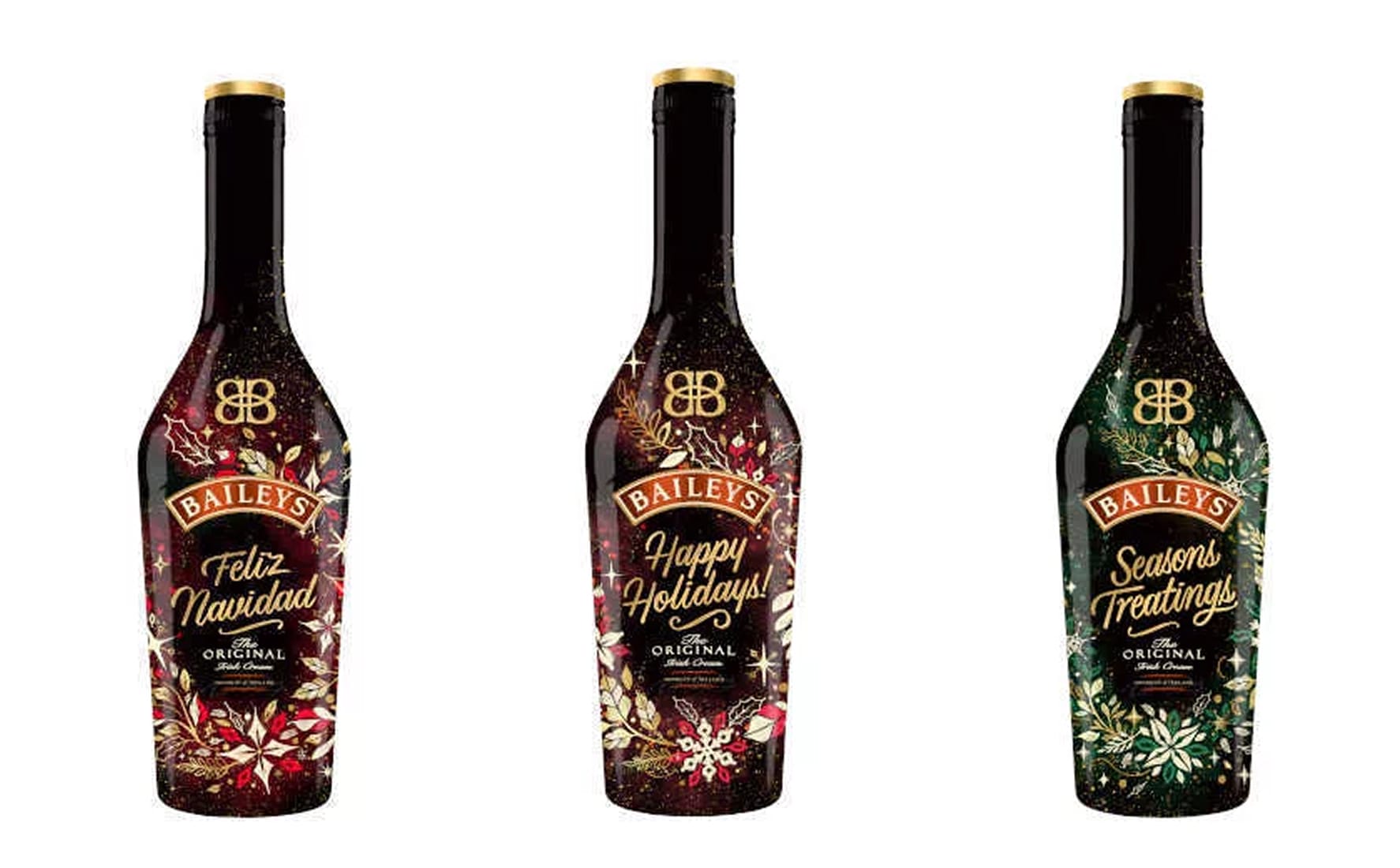
Limited runs are always a good marketing strategy, and they’re a perfect fit to give alcoholic beverages an exciting twist — adding serious shelf appeal. Bailey’s releases limited-edition holiday-themed packaging designs each year.
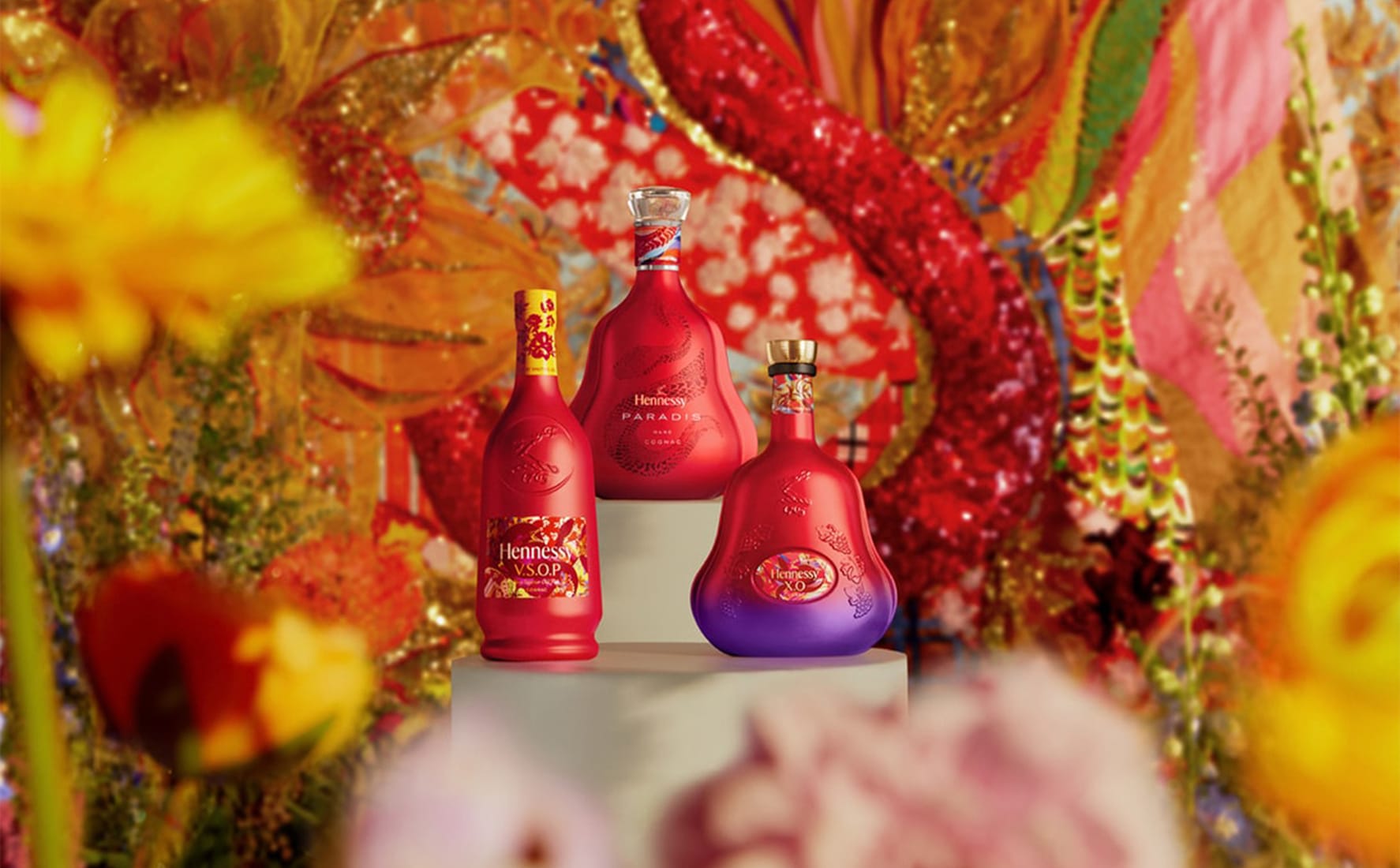
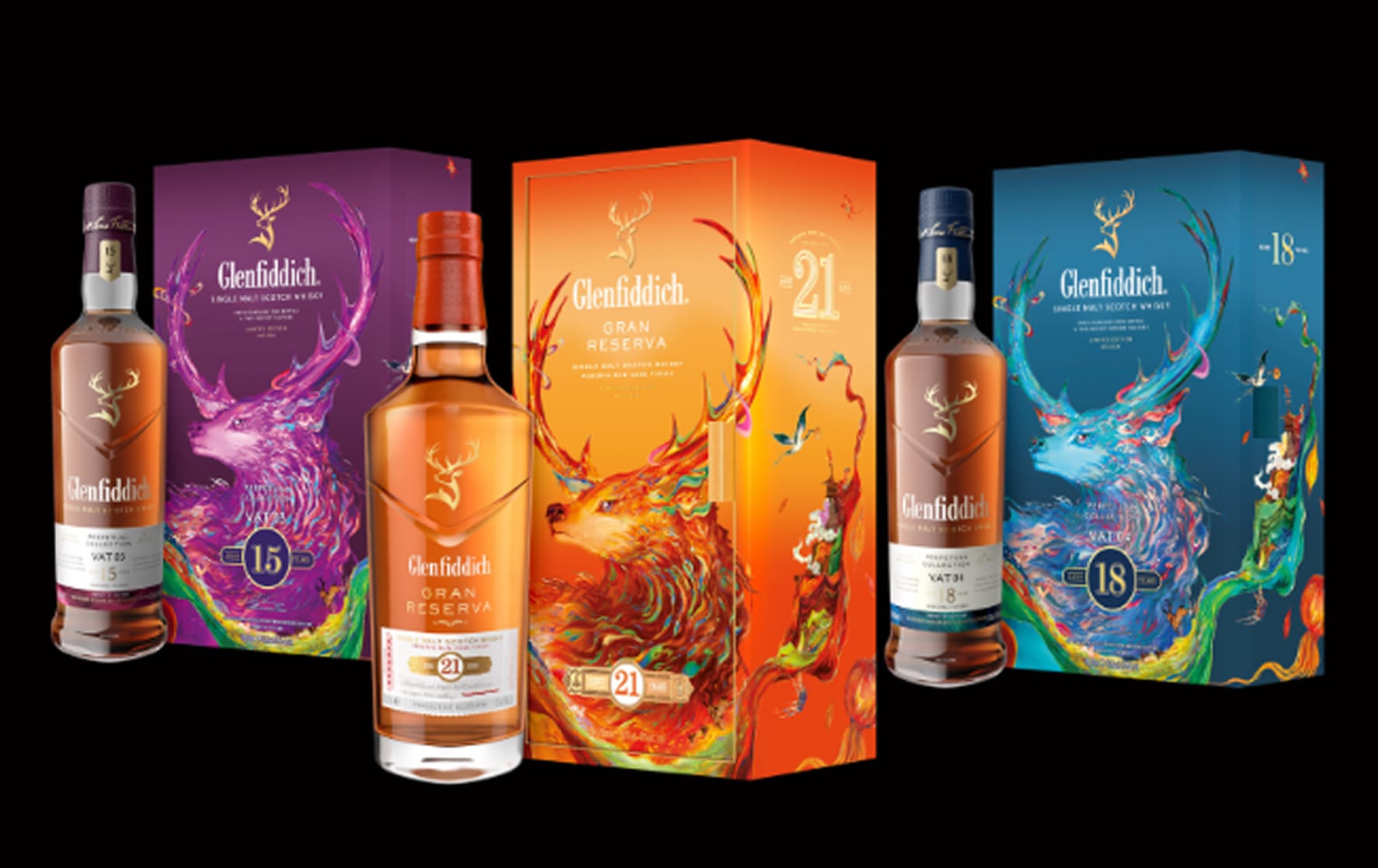
Maison Hennessy did a collab with Chinese fashion designer Shuting Qiu last year, creating a limited-edition run of Year of the Snake-themed bottles to celebrate lunar new year. Glenfiddich took a similar approach, collaborating with artist Zhang Yu to create a limited edition also for the lunar new year.
Anniversaries are also a good reason to launch a limited-run design, like El Tequino’s 65th anniversary packaging, which was limited to numbered 1,000 bottles and came with a certificate of authenticity.
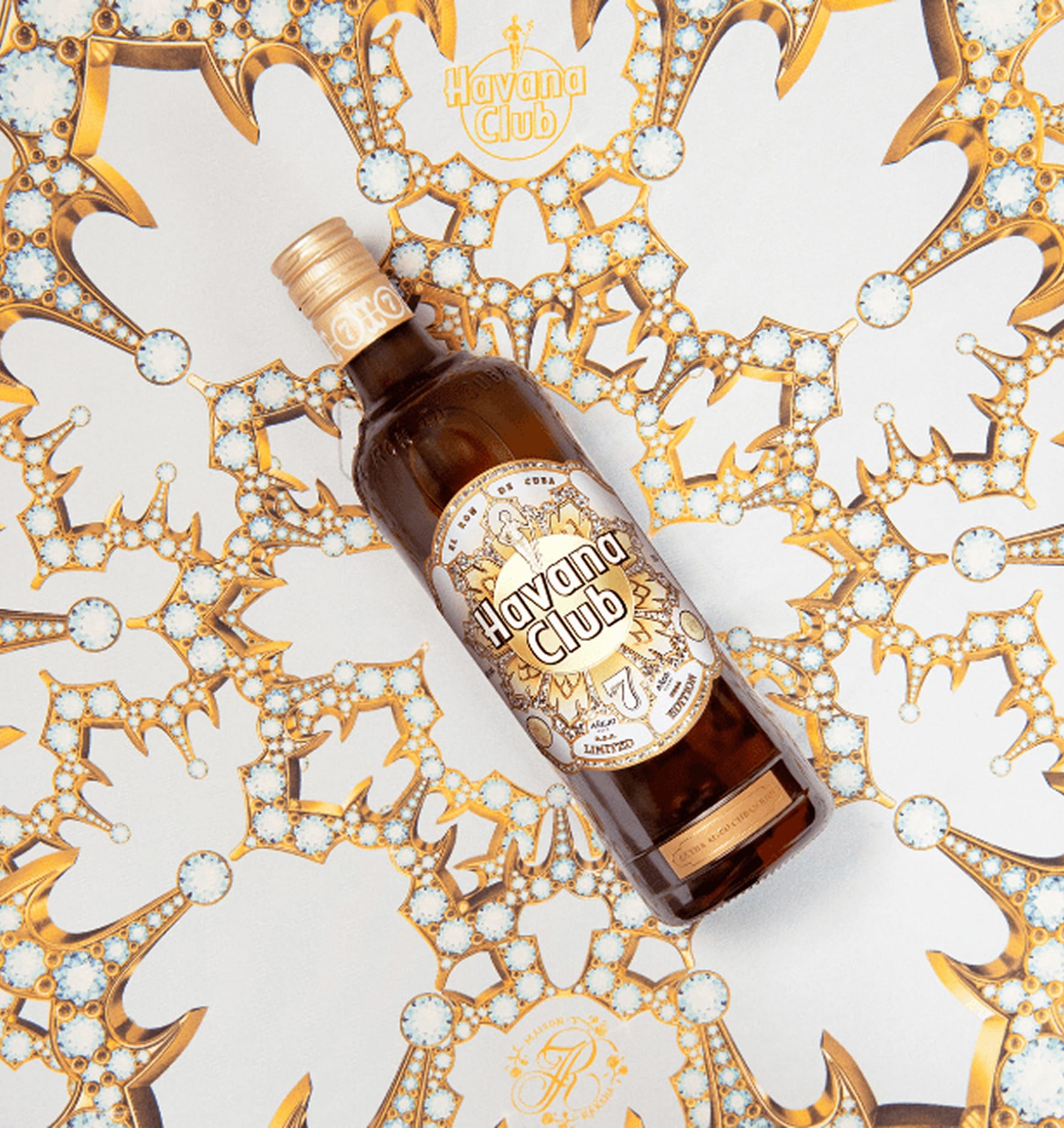
Havana Club teamed up with celebrity jeweler Jonathan Raksha to design a limited-edition festive bottle for their Añejo 7 Años rum.
Personalized Alcohol Packaging
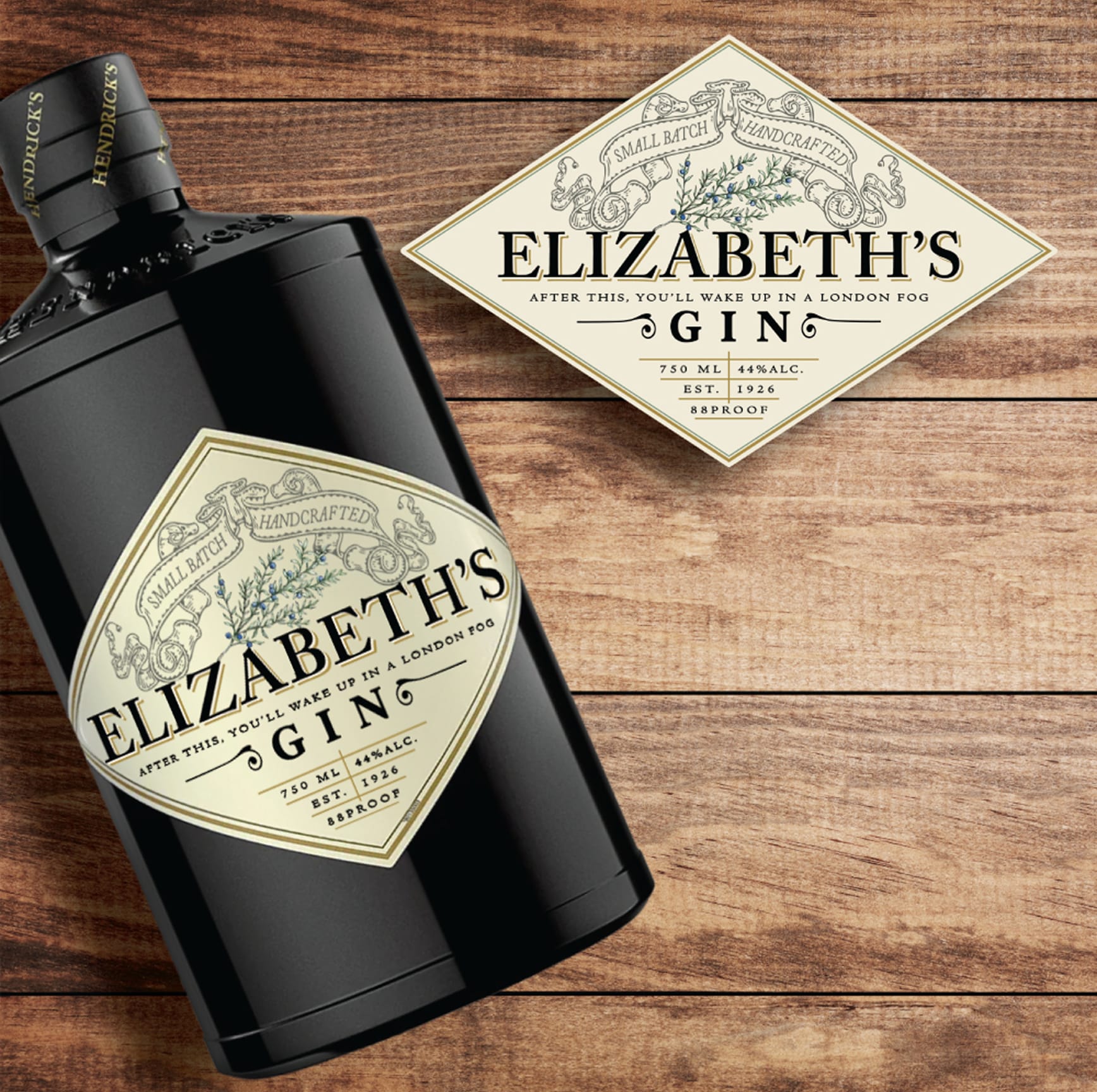
Many of us have a beverage of choice, and some brands are capitalizing on that by offering personalized alcohol packaging. Spirited Gifts sells a wide range of popular liquors with customizable labels, including whiskey, gin, tequila and rum. Just pick your poison then personalize the label for yourself or as a gift. UK retailer INKD also offers bespoke bottles of spirits with customizable labels, including a personalized message.
Other brands offer customized engraving on bottles of wine, champagne and spirits, or premium wood boxes which can also be customized and engraved with your personal message. What better way to make a moment memorable than with a collectible liquor packaging that’s personalized and special. One thing is for sure — you won’t want to recycle these bottles and boxes when you’re done.
The Future of Alcohol Packaging
Alcohol packaging has come a long way from the basic bottle or can. And with consumer preferences constantly changing, the future looks bright. Sustainability, interactivity and convenience are likely to keep driving innovation in liquor packaging, as savvy brands evolve to keep pace with consumer tastes — and keep a leg up on the competition.
Partner with Ernest for Creative Alcohol Packaging Solutions
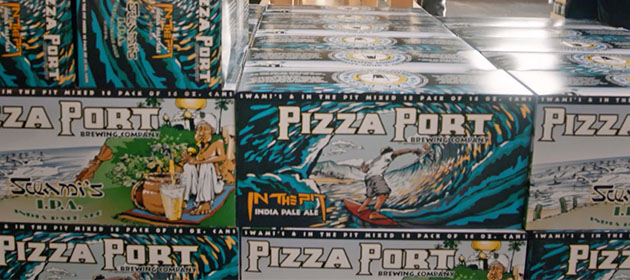
If you’re looking to refresh your alcoholic beverage packaging design, Ernest is ready to raise a glass. With extensive experience in consumer-branded packaging design, we’ve got solutions for every possible product and market. Check out this real-life success story from SoCal craft brewery, Pizza Port, to see what a difference the right partnership can make. And if you’re ready to do something different, we’re ready to help. Let’s talk shop. (Or bottle, can or keg.)